
Central Europe: Liberal Reform in Communist Regimes
By Sarah Mowrer
Oftentimes, the conditions of living as a citizen in a nation with a communist regime under the yolk of the Soviet Union made both the present and the future seem bleak. Rights and liberties were severely restricted; corruption was rampant, and economic crises meant lacking material products and available food. After traveling through countries within Central Europe—Poland, Czechia, and Germany—the poor conditions were made increasingly apparent as I delved further into learning about their communist pasts from post-WWII 1945 until the mass collapse of communism in favor of democracy in the year 1989. However, running parallel to the negatives of life under communist rule, I found appreciation for a deeper look into how the persistent development of democratic and liberal reform processes that ultimately pushed back against the communist regimes of Central Europe.
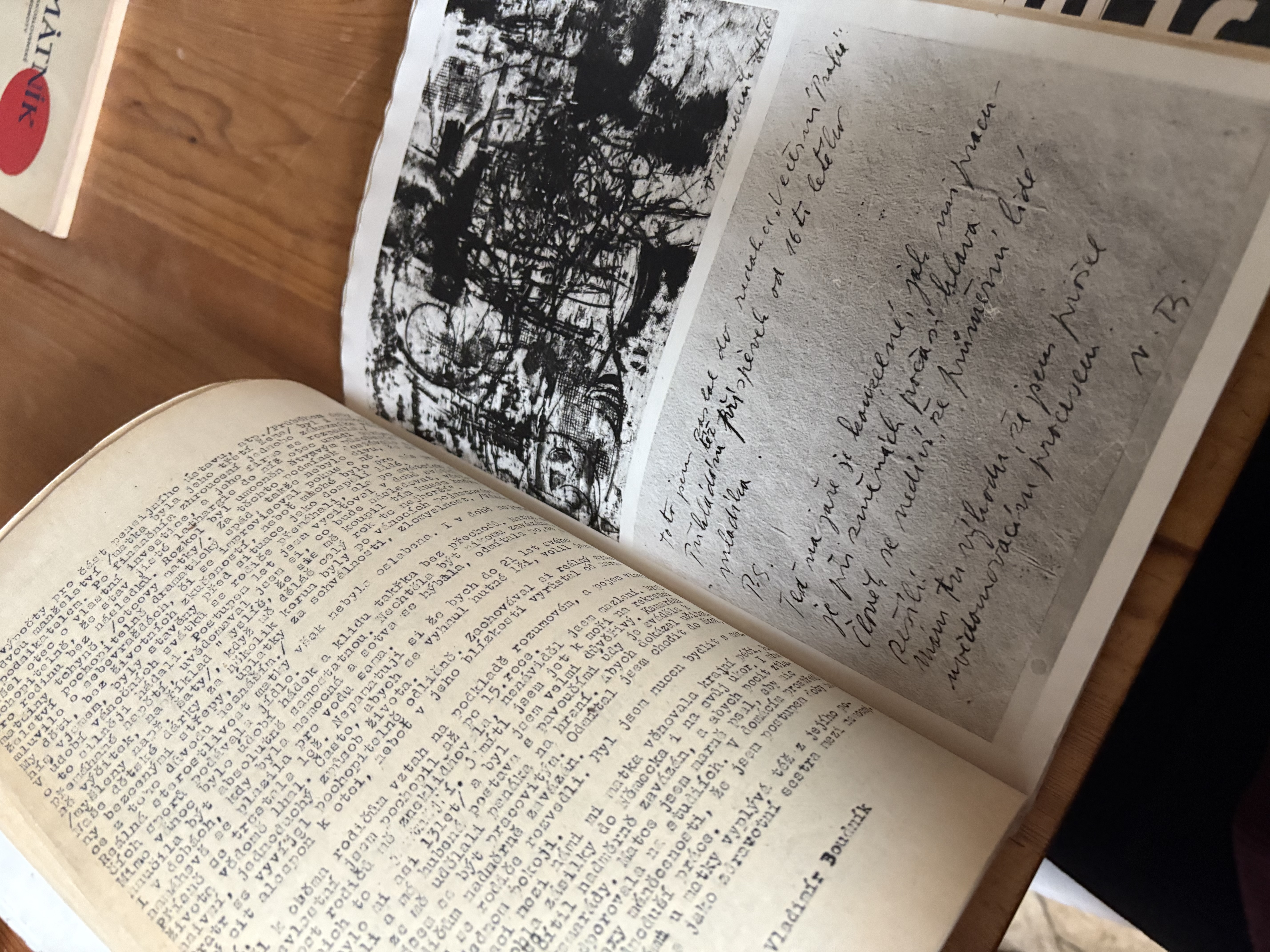
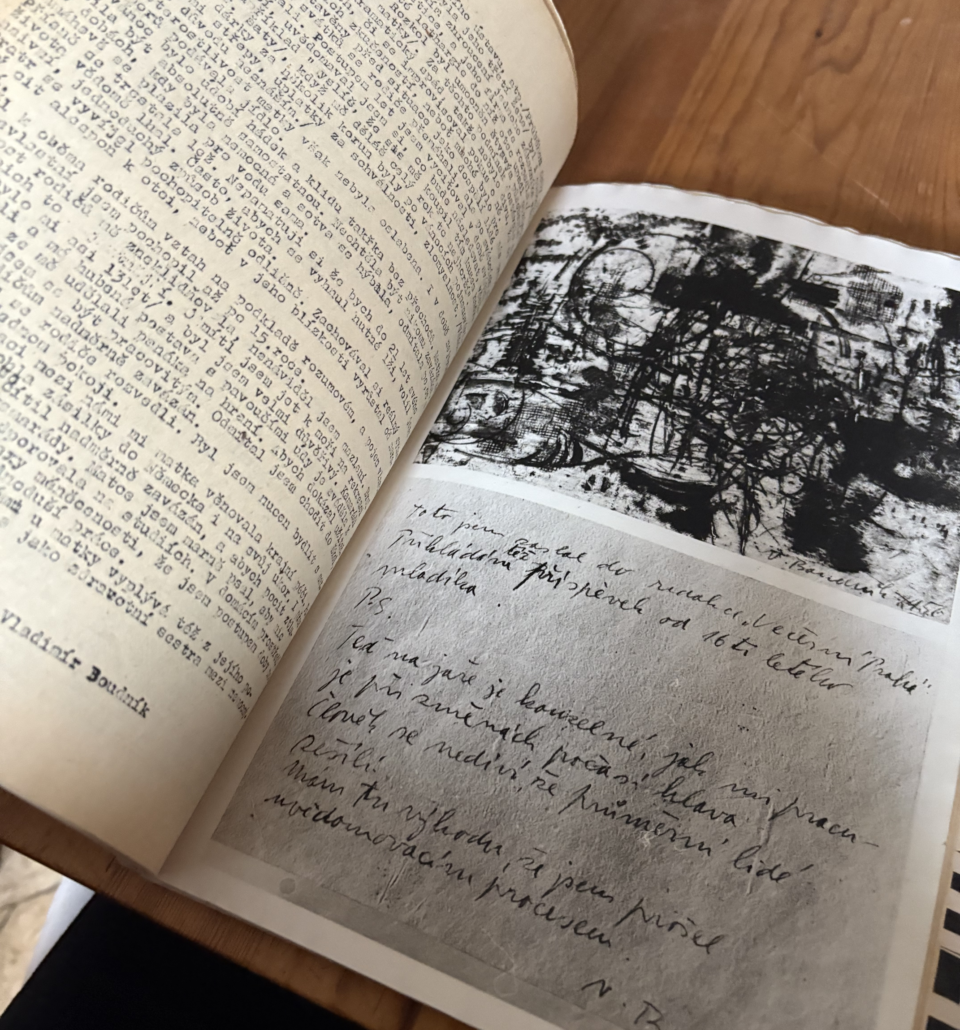
Banned samizdat literature, Libri Prohibiti, Prague
The historical background of communism in Central Europe was that the region fell under the sphere of influence of the Soviet Union, who exited WWII as a victor. The sphere of influence included the countries Poland, Czechoslovakia, Hungary, Romania, Bulgaria, and the new state of East Germany, together forming the Warsaw Pact bloc with the Soviet Union. The communist Soviet Union’s power over these states was not necessarily immediately accepted. In Poland, for instance, Soviet rule crushed hopes of reinstating a free, independent Polish nation that the Poles had fought for during WWII after the invasion of Nazi Germany from the West, and indeed, the Soviet Union from the East. For Poles, the outcome of WWII was essentially a loss, even if they were with the victorious Allies. The political influence of the Soviet Union and the threat of its Red Army backed local communist regimes coming into power in each of the new satellite states of the Soviet Union. Therefore, the communist regimes could govern despite lacking legitimacy amongst the population. The beginning of the firm entrenchment of communism was followed by a period of High Stalinism, named after the leader of the Soviet Union, Josef Stalin. Stalinism was characterized by mass repression and persecution. Penalties during this time were extremely harsh, even for minor or fabricated crimes: death, severe torture, excessively long prison sentences, or the Gulag. There were many “show trials” that resulted in the execution of political adversaries to communism, Home Army soldiers that fought in the underground Polish resistance movement in WW2, and prominent intellectuals. Essentially, the victims were anyone who could eventually pose a threat to the dominance of the Soviet Union by provoking resistance against the communist regime.
It should be made clear that many attempts to implement reform ended in failure. This failure was reckoned with during my visit to Prague, the capital city of Czechia (formerly Czechoslovakia). Prague Spring in 1968 was an attempt to have “socialism with a human face” where the communist regime stayed, but with the addition of newly implemented liberal reforms. The reforms included relaxing censorship laws, allowing freedom of speech, legalizing trade unions and other political parties, and the easing of travel restrictions. The Soviet Union made clear how threatening they saw any type of reform to their grip over Central Europe. They activated the Brezhnev Doctrine, a Soviet policy that justified military intervention into states of the Warsaw Pact under conditions of a threat to communism and determined that a threat to one state means a threat to all within the Pact. The Soviets called for the neighboring satellite states to join in an invasion of Czechoslovakia to destroy the “threat” reform posed. Prague Spring was short-lived; its leaders were imprisoned, and reform was discouraged so thoroughly that Czechoslovakia achieved it late after other countries during the collapse of the Soviet sphere of power decades later. However, despite the example made of Czechoslovakia, it seemed an important point to me that attempts to implement reform and movements championing democracy continuously appeared across the Soviet bloc. Critically, each generation brings new hope and makes an effort even after previous discouraging failures. I felt this realization in Wenceslas Square in Prague, being shown images by our guide of people gathering in mass protest against the communist government where I was standing now during the Velvet Revolution that ended communism in Czechoslovakia in November 1989.
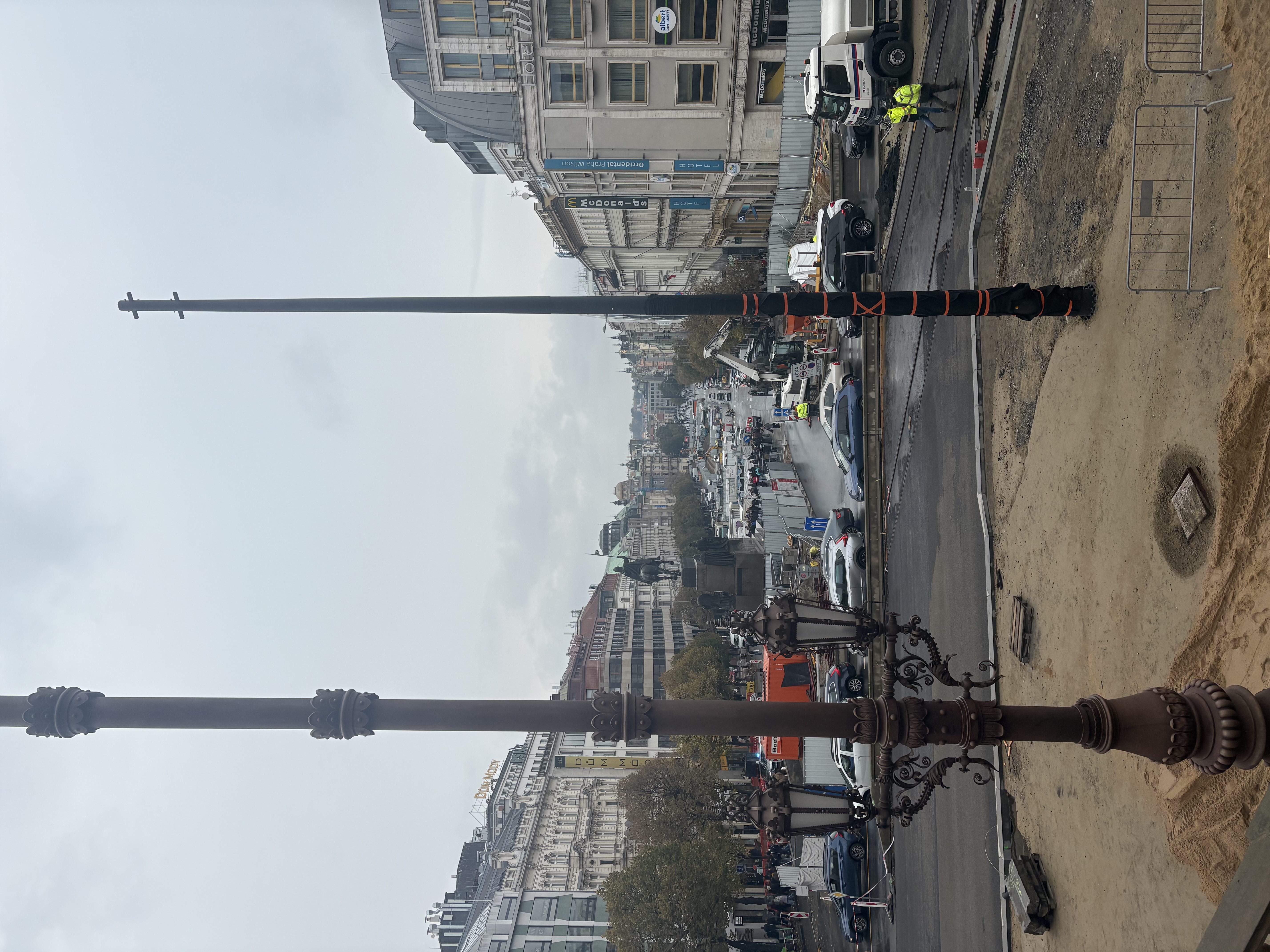
View of Wenceslas Square, Prague
Success of liberal and democratic pushback is connected to their relationship with the weaknesses of the communist system. Liberal and democratic processes, in some ways, invaded the cracks of contradictions within the communist system that lead to the system undermining itself. For instance, the practice of censorship under the regime. Since censorship under communism required any and all material to align with the Party agenda, any word not controlled therefore, by nature, must oppose the Party. This fault of censorship makes it easier to recognize what messages and works the regime doesn’t want people to read. Therefore, anything and everything published through the underground becomes an alluring, direct opportunity to go against the repressive communist regime. In Prague, the censorship laws led to what can be called the golden age of samizdat, a term that means “I publish on my own”. Samizdat was illegal literature written, published, and distributed underground at the great risk of people involved. New works were created that opened a rather democratic sphere of discourse for criticism of the regime and other important topics. For instance, Charta 77, which criticized the communist regime’s repression of freedom of speech. The scale and breadth of samizdat was displayed for me at a library in Prague that preserves the many titles that were once illegal under the communist regime. In the case of Poland, Professor Konstanty Gebert noted that at least 3.5 million people had regular access to samizdat. Underground publishing created communities and built systems of trust since people in collectives risked their freedom to stay informed. These connections are important for building a basis for mass movements in the future.
Another example of movements supporting liberal reform taking advantage of contradictions in the communist system is the Helsinki Accords. The example of the Helsinki Accords represents instances of reform and contradiction on a higher, national level between high-ranking bureaucrats reaching impact on local levels. The agreement was that in exchange for the Soviet Union gaining recognition from the West of their WWII territory gains, they only had to sign a paper agreeing to provide certain liberties. This seemed like a fair tradeoff; the Soviets walked away feeling like winners after achieving material gains that legitimized Soviet Union territory claims. However, the Helsinki agreement paper to provide liberties caught regime enforcers in a trap: liberal ideas contained in the document undermine the system but cannot be ignored as they originate internally from the system itself. People on the ground in their everyday lives found out about their newly agreed-upon rights and went on to use it as a framework for dissension against their governments for human rights violations. The pressure the protests put on the communist regimes hugely contributed to feelings of hope in the populations and the eventual collapse of communism.
Outside connections and support from the West were a key pillar of the development of reform. Western support allows those fighting for liberal reform in Warsaw Pact communist states to feel less isolated and therefore encouraged. For instance, the visit of U.S. President John F. Kennedy to West Berlin in 1963. He stood and made a speech from the Schoeneberg Rathaus; I saw the building myself while in Berlin, and it immediately made me recall Kennedy’s famous line: “Ich bin ein Berliner” that he delivered to the people of West Berlin. American support for and visitation to the isolated democratic half of the city of Berlin, enveloped on all sides by communist East Germany under the Soviet sphere of influence, conveyed a feeling of connection to those who feel trapped by the communist regime and hope for a democratic future. Another major factor of Western influence on reform in communist states was the intellectuals from Central European countries who migrated abroad. They continued to write about the situation in their former countries and raise awareness in the West. Furthermore, their children, the next generation, became important financiers for movements striving for greater liberties and reform, such as Solidarity in Poland.
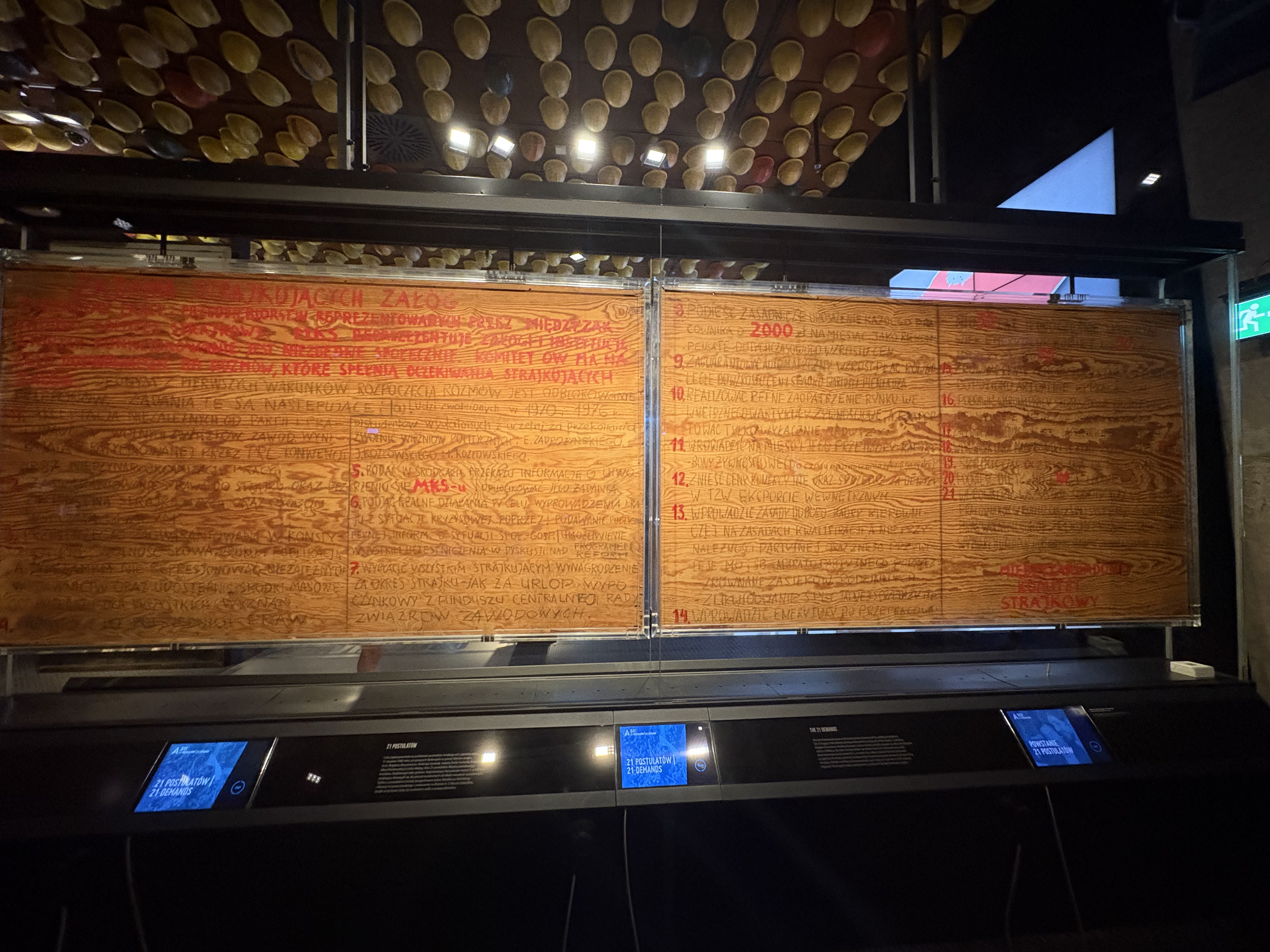
21 demands, European Solidarity Center, Gdansk
Solidarity was a mass movement in Poland that originated in the Gdansk Shipyards. What began as a strike for workers expanded to demands that cover general rights toward liberal reform in Poland. Their 21 demands are clearly presented on two plywood boards hung in the Gdansk Shipyards. Today, the 21 demands on their original plywood are on display at the European Solidarity Center in a museum exhibit. Seeing them myself at the museum was deeply impactful since they represent the powerful force of a collective working peacefully toward reform. At a certain point, Solidarity was recorded to have in its membership a fourth of all of Poland, numbering some 10 million people. A few of the prominent demands are the right to assemble a free, independent trade union, more government transparency, and greater allowance for freedom of speech and press—including discussions on reform.
Another exhibit in the museum of the European Solidarity Center is a replica of the famous Round Table, a place of negotiations between Solidarity and the officials of the communist regime in Poland. The room was pure white, centered by a large, circular table meant for open discussion coming from people of equal positions, despite having conflicting perspectives. the government communist regime and Solidarity, but common interests to reach a compromise in a democratic way. The common interest was to have Solidarity join the political arena in order to publicly endorse the economic reform the communist government wished to pass. In return, Solidarity would be recognized as legitimate and have the chance to negotiate further. Both groups had to reach a settlement, or new upcoming dissenting groups could gain power and make the political situation in Poland chaotic. The biggest result of the negotiations was the opening of partially free elections in Poland, which had previously been under the complete control of the communist Party. Every available government seat open for Solidarity to claim was won, a result of overwhelming success. Over the next year, the communist party lost power after the newly elected Democratic Party members—composed of Solidarity members—entered an alliance coalition with the other previously communist-aligned Parties in the government. Unlike in previous upsets of communist dominance such as Prague Spring, the communist party in Poland did not have the backing of the threat of an invading Red Army from the Soviet Union, who were facing their own internal economic problems and loss of faith in a failing communist system.
As represented by the camera recreations in the Round Table museum room, the negotiation process was broadcasted. This increased visibility in Polish media was a large step forward toward increased freedom of the press. Additionally, the broadcasting allowed news of the successful negotiations between a reform movement and a communist government to spread to the people of other states under communist rule. These people then took inspiration from Poland and Solidarity to also form movements to break free from communism in a peaceful manner.
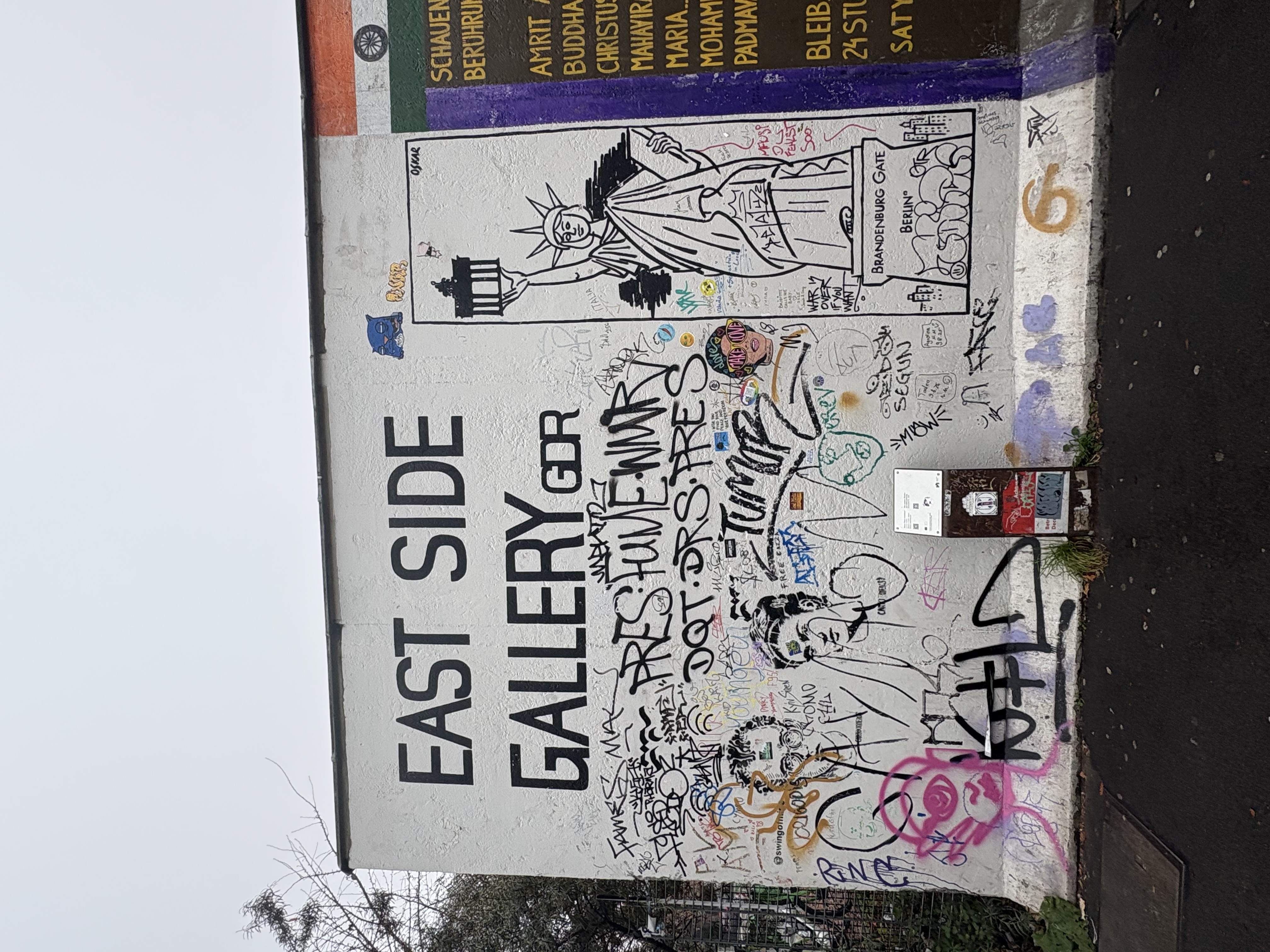
Beginning of East Side Art Gallery, Berlin
The dissolving power of the communist regimes across Central European states eventually cumulated into the fall of the Berlin Wall on November 9th, 1989, which once stood as a strict physical barrier between the democratic West Berlin and the communist East Berlin. The Berlin Wall had broadly represented the entrapment of people under communist rule and their separation from the rest of the democratic world. Its fall led to the reunification of Berlin and Germany as a whole as a democratic state. Today, a part of the wall still standing in Berlin has been repurposed as the East Side Art Gallery on the side that was once known as East Berlin. The exhibit is a series of wall murals painted by 118 artists from 21 countries. The collaboration of international artists shows a reaching out to the Western, democratic world at large after being isolated in the communist, Soviet bloc. Each unique mural represents the artists’ hopes and feelings on a change to a new, freer political future after the success of peaceful reform movements against communist regimes.

Berlyn by Gerhard Lahr, East Side Gallery, Berlin
The hope of collective, peaceful resistance succeeding against such corrupt, powerful regimes due to a constant chain of groups promoting liberal and democratic reform over a period of decades was felt extremely impactful to me. I was impressed by the persistence of reform efforts even during tough times and when people had a lot to lose. The struggle, methods, and results feel like a miracle; one not without its flaws, but still the most important reason Central European countries can have the freedoms they do today. My own experience of traveling through, learning about, and living in Central Europe was paved by the work of reform movements carried out by people in the millions.
